







Related news
-
How to Choose a Luxury Silk Scarf for Your Brand: Fabric, Printing, and Quality Guide

-
Best Silk Travel Pillow for Long Flights What to Look For in 2026

-
Custom Silk Scarf Printing for Brands: From Artwork to Wholesale Production

-
Women's Silk Pajamas Short Set: How to Choose the Perfect Luxury Sleepwear for Comfort and Style

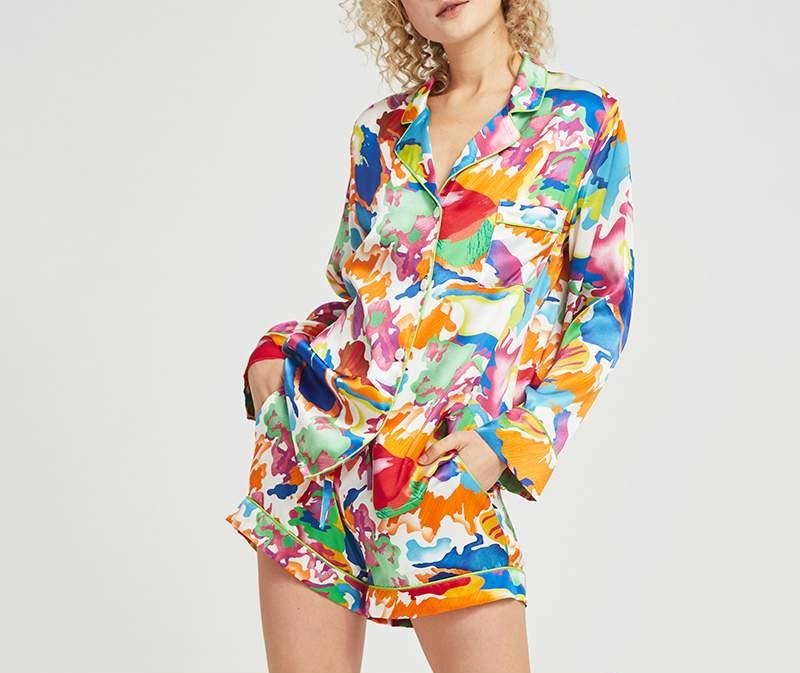
Silk Pajama Set Women’s Buying Guide: Fabric, Fit, and Quality
If you’re looking for a quality silk pajama set for women, then no doubt you have the same expectations that others have. Namely, it will feel like silk, look good, and get worn lots of times before deteriorating after washing. Many different factors must be taken into account when looking at purchasing silk women’s pajamas, including the type of fibers used within the pajamas, the weave that the fabric has been put through, the weight of the silk fabric, the fit of the silk garments, the way that they have been made, and finally the small details that have been included. Below is a detailed silk guide for purchasing the perfect set of silk pajamas for women from the point of view of an end user and from that of a brand buyer.

Silk Pajama Sets for Women: Start With Fiber, Weave, and Momme
Real Silk vs Polyester Satin: Check the Fiber Label First
Silk is a natural fiber. Satin is a weave. A shiny garment can therefore contain no silk at all. When comparing silk pajama sets for women, look for a clear composition such as 100% mulberry silk. Skip vague terms like “silky” or “satin-touch.” Business buyers should ask for fabric details before they approve any sample.
Silk Satin vs Crepe de Chine for Women’s Sleepwear
Silk satin, or charmeuse, shows a bright face and smooth drape. It gives the polished look people link with silk satin pajamas. Crepe de chine shows a gentler shine and a light texture. Silk crepe de chine sleepwear works well for buyers who want quiet elegance. The choice depends on the look of the collection, the climate, and how the items will be cared for.
16, 19, or 22 Momme: Match Silk Weight to the Product
Momme measures fabric weight. It does not tell the full story of garment quality. A useful comparison of 16 vs 19 vs 22 momme silk pajamas must also look at weave, stitching, opacity, and how the item will be used.
Lightweight Silk for Summer and Resort Collections
Sixteen momme works well for camisoles and short sets in warm places. Check pale colors for see-through spots. Make sure seams have enough strength for regular use.
Midweight and Heavy Silk for Year-Round or Luxury Sets
Nineteen momme gives a good balance of drape and strength. Twenty-two momme offers a richer feel for premium robes or gift sets. Higher weight also uses more fabric, so it is not always the top choice.
How Should a Women’s Silk Pajama Set Fit?
Relaxed Fit, Ease Allowance, and Freedom of Movement
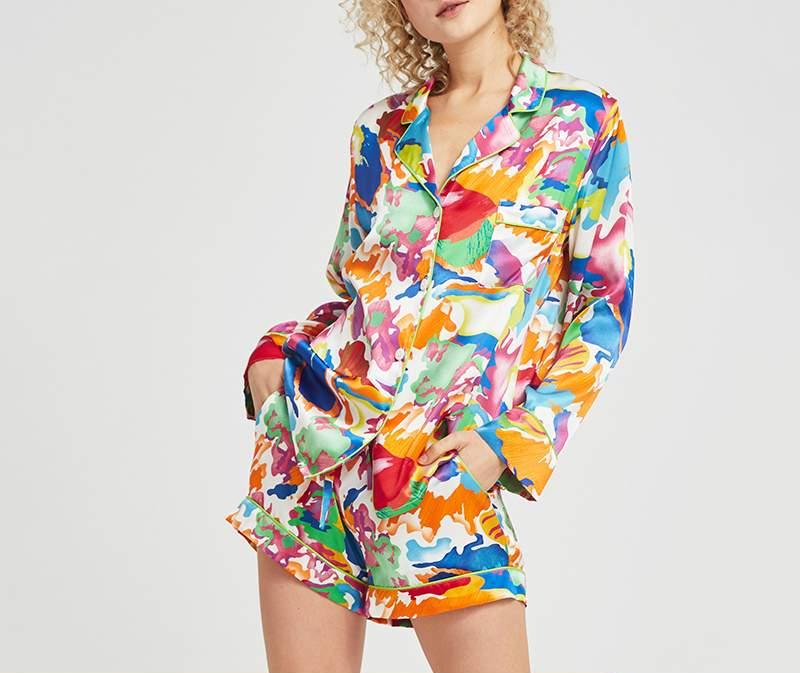
A woman’s silk pajama set should feel relaxed without looking baggy. Silk has little stretch, so the pattern needs room for turning, sitting, and sleeping.
Key Measurements for Pajama Tops
Check bust, shoulder width, sleeve length, armhole, and top length. Button-front styles need enough room at the chest to avoid pulling or gaping.
Key Measurements for Shorts and Pajama Pants
Review waist, hip, rise, thigh, inseam, and leg opening. Rise and waistband recovery matter most. A garment may look fine when flat but feel tight when seated.
Long Sets, Short Sets, Camisoles, and Robes by Use Case
Warm-Climate, Travel, and Resort Sleepwear
Short sets and camisoles suit warm places. Buyers should still test strap stability, coverage, and opacity under natural light.
Year-Round, Bridal, Gift, and Loungewear Collections
Long sets and robe sets suit bridal, gifting, and coordinated loungewear. They use more fabric and need careful size grading, especially when prints line up across pieces.
Construction Details That Define High-Quality Silk Pajamas
Seams, Piping, Buttons, Waistbands, and Pocket Placement
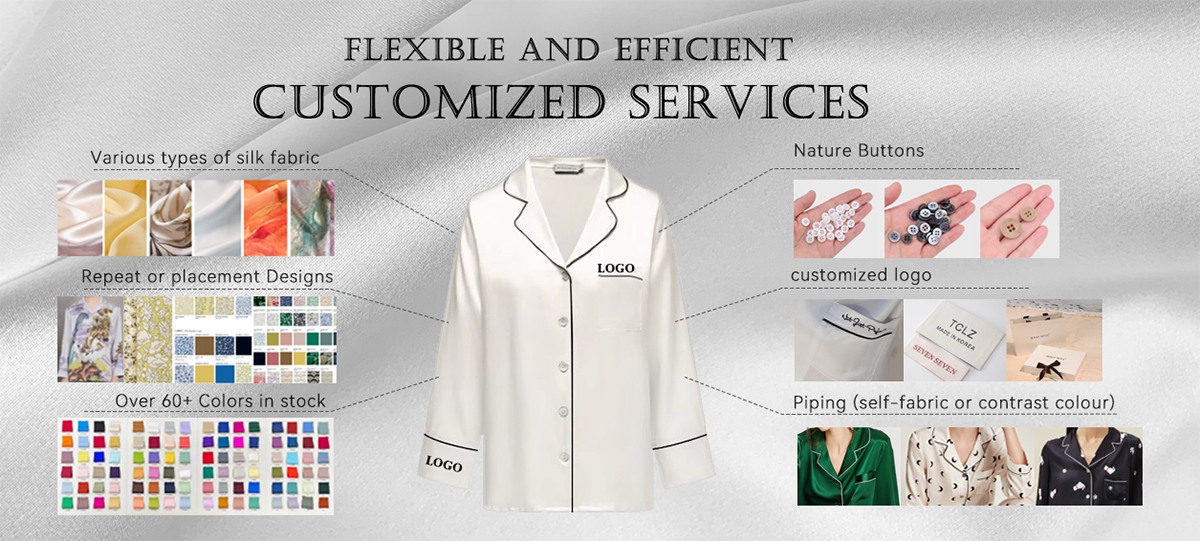
Clean inside seams cut down on fraying and feel smoother on skin. Piping should follow curves without twisting. Buttons must stay attached. Elastic should snap back after stretching. A heavy or poorly placed pocket can pull the front panel out of shape.
Opacity, Shrinkage, Colorfastness, and Care Performance
Check pale silk under real light. Test samples for shrinkage and wash results. For dyed or printed silk pajamas, colorfastness counts as much as color match. Bleeding onto lighter panels counts as a quality issue.
A Practical Quality Checklist for Samples and Finished Sets
Check fiber content, momme, shade match, print placement, garment measurements, seams, buttons, waistband recovery, labels, pressing, and packaging. A written checklist works better than loose claims like “premium quality.”
Printed Silk Pajamas: How to Evaluate Design and Production
Choosing Fabric for a Luxury Printed Silk Pajama Set
A luxury printed silk pajama set depends on how the design works with the fabric. Smooth satin can show sharp lines and rich colors. Crepe de chine gives a softer look. Review design size, base color, sheen, and momme at the same time.
Artwork Resolution, Color Matching, and Print Placement
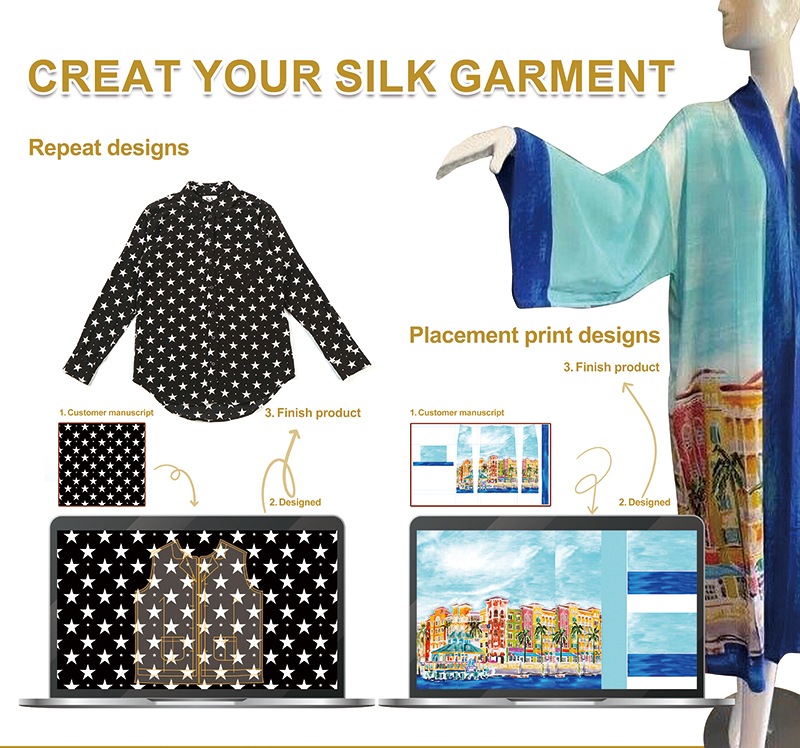
Supply artwork at the final size and the right resolution. Buyers should also state whether the pattern repeats, sits in one place, or uses a separate layout for each panel.
Pattern Matching Across Collars, Pockets, and Side Seams
Matching every seam can waste fabric. A better luxury standard is to focus on visible spots such as the collar, front pocket, center front, and cuffs.
Approving Color Before Bulk Production
A digital proof shows the layout. A fabric strike-off shows how color looks on silk. The finished sample was then checked for scale, hand feel, and seam alignment. These steps should be finished before bulk cutting starts.
Custom Printed Silk Pajamas for Private Label Collections
Labels, Embroidery, and Branded Trims
For custom-printed silk pajamas, branding can include labels, embroidery, custom buttons, or contrast piping. Review these parts together for a clean result.
Gift Boxes, Pouches, and Retail Packaging
Packaging should match the sales channel. Protective bags work for wholesale. Pouches or gift boxes help bridal and premium retail. Confirm sizes after folding.
Custom Silk Pajama Sourcing: MOQ, Sampling, and Lead Time
MOQ by Color, Style, and Size: What Buyers Should Confirm
A custom silk pajama MOQ may apply per style, color, print, or size mix. Confirm whether sizes can be grouped, whether printed and solid sets follow different rules, and whether a new pattern changes the number.
From Tech Pack to Fitting Sample and Size-Set Approval
Fabric Swatches, Print Strike-Offs, and Development Samples
A swatch confirms material. A strike-off confirms print and color. A development sample checks construction. A silk pajama fitting sample is then checked for proportion, movement, and comfort.
Measurement Tolerances and Pre-Production Sign-Off
Before we start producing, all of your approvals for measurements, for tolerances, for trims, for labels, for print position, and packaging should all be outlined in writing. Making changes late in the production process can cost more and cause a delay in delivery.
Production Lead Time, Packaging, and Delivery Planning
Lead time covers artwork prep, printing or dyeing, sampling, sewing, inspection, packing, and shipping. New patterns, print matching, or custom boxes may add time. Buyers should plan backward from the launch date.
How to Compare Silk Pajama Manufacturers
Material Proof, Certifications, and Process Transparency
A good supplier should be able to explain the composition, momme, weave, printing process, shrinkage, and care to you. Certification claims must be proven.
Quality Standards, Defect Handling, and After-Sales Support
Ask the supplier about quality control, how they would measure defects, and what would happen with wrong goods. Clear rules on inspection and repair are worth much more than empty promises.
Why Brands Choose Zhigeng Silk for Custom Silk Sleepwear
Material and Pattern Support From Design Brief to Fitting Sample
Zhigeng Silk develops custom sleepwear in silk satin, silk crepe de chine, and other suitable fabrics. We can work from client patterns and measurements, help with material choice, and prepare fitting samples for long sets, short sets, robes, and camisoles.
Private Label Finishing, Quality Checks, and Delivery Support
For private label silk sleepwear, we support custom print work, sizing, labels, embroidery, trims, and branded packaging. Our process covers fabric checks, print or dyeing review, sewing inspection, and final check before pressing and packing. This helps brands turn original artwork into production-ready custom print silk pajamas through one smooth flow.
FAQ
Q: What is the best silk for a woman’s pajama set?
A: Mulberry silk is a common choice, but weave and momme also matter. Satin offers shine and fluid drape, while crepe de chine has a softer, lightly textured appearance.
Q: Is 19 or 22 momme better for silk pajamas?
A: Nineteen momme balances comfort and strength for many year-round sets. Twenty-two momme feels heavier and may suit premium robes or gift collections. Intended use matters more than weight alone.
Q: How can real silk pajamas be identified?
A: Check the fiber label for clear wording such as 100% mulberry silk. Do not rely only on shine or the word satin. Polyester can also be woven with a satin surface.
Q: Should silk pajamas fit loosely?
A: They should include enough ease for free movement without looking oversized. Chest, hip, rise, armhole, and thigh measurements are especially important because silk has limited stretch.
Q: What should be checked before ordering custom silk pajamas?
A: Check composition, weave, momme, dimensions, printing method, MOQ, sample stages, color check, labels, packaging, quality standard, lead time, and defect handling before starting to produce in bulk.

 consult
 WHATSAPP
 leave message
 top
top