



Related news
How Are Leopard Prints Made on Silk Scarves? Digital vs. Screen Printing
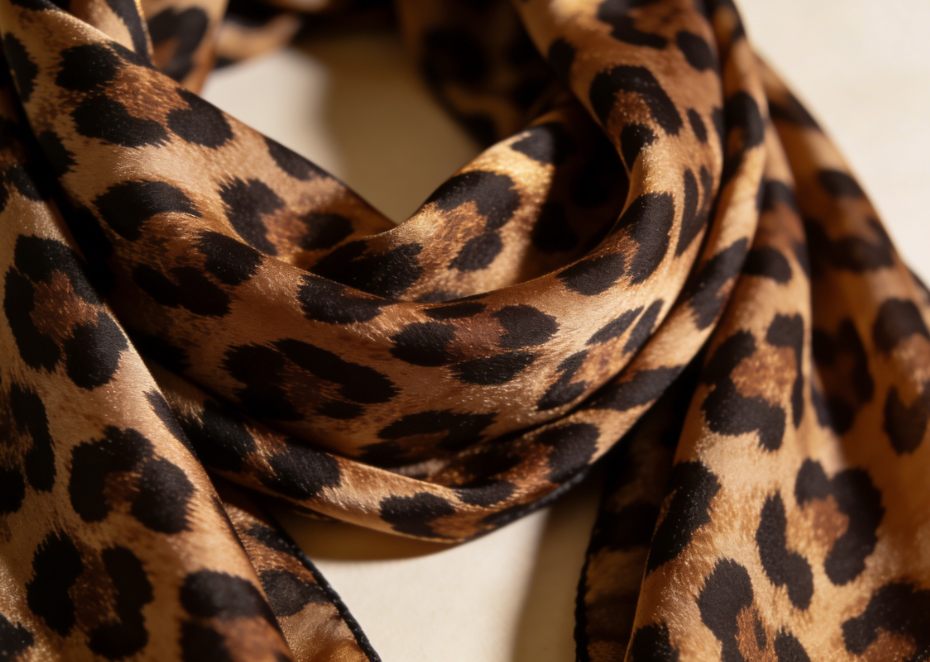
A leopard pattern looks spontaneous, but printing it well on silk is controlled work. Every rosette needs a clean edge, a nuanced center, and enough variation to suggest fur without turning muddy. For a leopard print neck scarf, this matters because the fabric is viewed close-up, folded repeatedly, and often shows both sides.
Digital inkjet and screen printing are the two main routes. Digital excels at gradients, many colors, and small runs; screen printing rewards simplified artwork and larger orders.
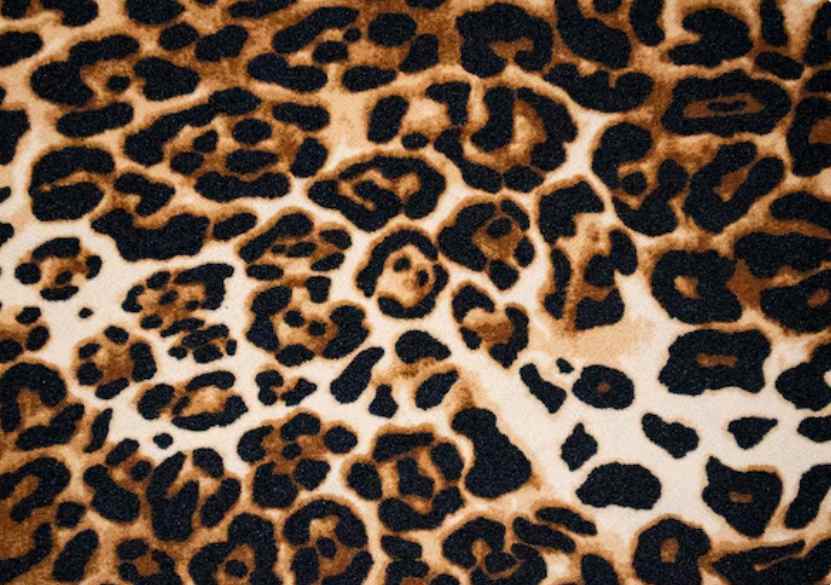
How to Print on Silk Scarves with a Leopard Pattern
Printing begins before dye touches fabric. Artwork is cleaned, scaled, and checked at full size. Natural rosettes vary in diameter, spacing, outline weight, and center color; a mechanical repeat looks artificial on a small scarf.
For how to print on silk scarves, start with a production file in JPEG or TIFF format, RGB Adobe 1998 color mode, and at least 200 dpi; 300 dpi is safer for complex or double-sided work. The designer should also mark the hem allowance and decide whether important rosettes may cross the edge. A physical strike-off is then used to judge color on the chosen silk rather than on a backlit monitor.
The silk is pretreated, printed, steamed to fix color, washed, dried, cut, hemmed, inspected, and packed. Poor washing or finishing can leave it stiff, dull, or prone to crocking.
Digital Printing: Best for Fur-Like Detail and Flexible Quantities
Digital textile printing sends artwork directly to an inkjet printer. Tiny droplets build beige grounds, amber centers, charcoal outlines, and soft transitions without a screen for every color.
Why digital printing suits leopard artwork
Digital printing handles photographic texture, watercolor edges, shadows, and many colors. It suits an organic rather than graphic motif, while supporting samples, multiple colorways, logos, and lower-volume launches without screen setup.
Single-sided digital printing places the image on the face and relies on dye penetration to create a lighter reverse. That can be acceptable when the scarf is styled with one dominant side. Double-sided digital printing is better when folds expose both surfaces or when two coordinated colorways are required. Registration and fabric stability become more demanding, so thicker silk is generally safer.
Digital printing limitations to approve in sampling
Fine detail does not guarantee correct color. Weave, pretreatment, dye, steaming, and monitor profiles affect results, while dark single-sided prints may have a paler reverse. Approve the exact fabric, face-to-back appearance, and hem—not just a paper proof.
This prevents expensive surprises after bulk production begins.
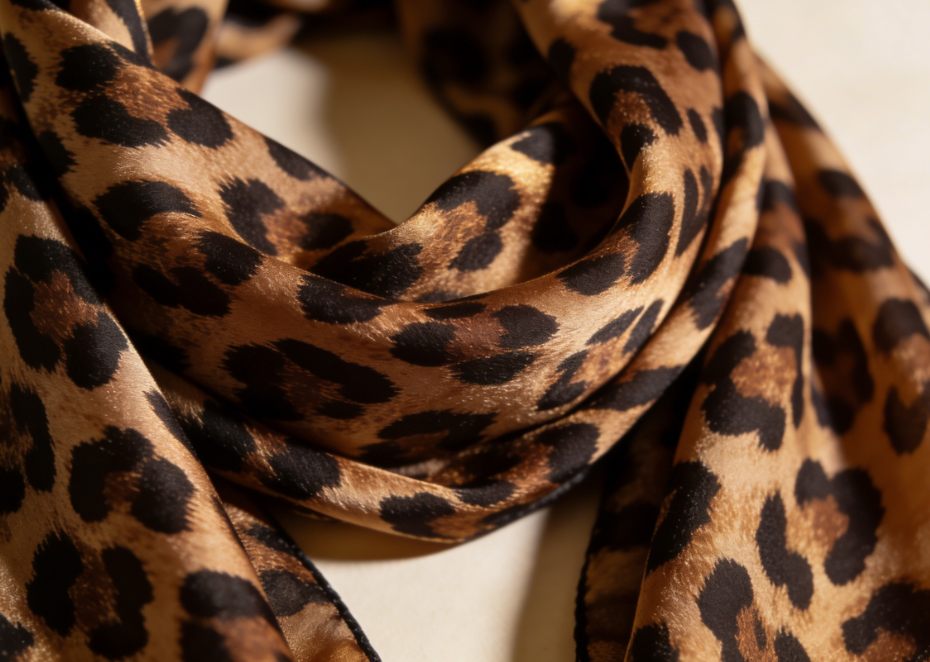
Screen Printing: Best for Bold Spots and Larger Runs
Screen printing separates the design by color. Each prepared screen acts as a stencil, pushing one dye paste through the mesh before the next color is aligned and printed. A four-color leopard design may therefore need four screens plus careful registration.
Where screen printing performs well
The method produces strong, flat color and repeatable edges. It works beautifully for stylized leopard spots with a limited palette, such as black rosettes over camel and tan. Once screens are prepared, the setup cost can be spread across a larger order, making the unit economics more attractive at volume.
Screen printing can create a handcrafted character. However, each shade adds separation, screen-making, alignment, and cleaning. Soft gradients need halftones or simplified shapes, making digital printing more natural for photographic artwork.
Practical constraints for buyers
Screen printing normally requires a higher MOQ and longer setup. Manual table printing favors clear edges over blurred artwork. Ask whether quotations include screen charges, matching, strike-offs, and stored screens for reorders.
Digital vs. Screen Printing for a Leopard Print Neck Scarf
| Decision factor | Digital printing | Screen printing |
| Artwork | Gradients, photos, painterly fur, many colors | Bold rosettes, flat colors, clean outlines |
| Order profile | Samples, low MOQ, several colorways | Larger runs with stable artwork |
| Setup | No physical color screens | One screen and separation per color |
| Color changes | Relatively quick file adjustment | New separation or screen may be required |
| Reverse appearance | Light reverse or engineered double-sided print | Depends on dye, fabric, and process control |
| Main risk | Screen-to-fabric color mismatch | Registration errors and high setup burden |
Choose digital for visual complexity or launch flexibility. Choose screens for graphic motifs and orders large enough to absorb setup. Compare sampling, screen fees, rejects, reorders, and colorways—not unit price alone.
How to Choose Silk Scarf Quality Before Printing
Print cannot compensate for weak cloth. For how to choose silk scarf quality, verify fiber, momme, weave, finish, colorfastness, and construction together.
Fiber, momme, and weave
Specify 100% mulberry silk rather than relying on the word “satin,” which describes a weave, not fiber content. At Zhigeng Silk, we use 6A-grade mulberry silk and offers OEKO-TEX-certified options. Momme measures fabric weight; a higher number generally means a denser, heavier cloth, but the appropriate value depends on the weave and intended drape.
For double-sided digital work, We recommend substantial bases because very thin silk can allow opposing colors to interfere. Suitable options include 14, 16, 19, or 22 momme silk satin; 14, 16, or 19 momme silk twill; and 14 or 16 momme crepe de Chine. Satin gives a glossy face, twill adds structure and a visible diagonal, while crepe de Chine provides a softer, slightly grainy, low-luster surface.
Print, hem, and inspection checks
Examine rosette edges for bleeding, small spots for filling-in, large areas for banding, and both sides for unwanted ghosting. Rub a hidden area with a clean white cloth, compare the strike-off with the approved color target under consistent light, and confirm that washing has restored a soft hand.
Finishing matters on a narrow scarf. A hand-rolled edge gives a refined, dimensional finish, while a fine baby machine hem offers consistency and efficiency. Check stitch density, straight corners, puckering, label placement, dimensions, and pattern centering. The strongest supplier approval process covers the fabric lot, print, cutting, hem, packaging, and final inspection.
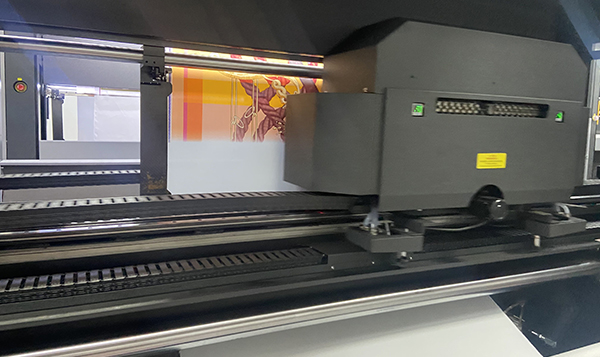
Turning Leopard Artwork into a Custom Production Order
At Zhigeng Silk, we can translate drawings, digital artwork, paintings, or photos into a custom print silk scarf. Our workflow covers proofing, fabric and method recommendations, printing, finishing, private labels, and packaging. One sample is available for double-sided digital scarves; typical sampling is 7–10 days and bulk production 14–20 days after approval, subject to seasonal confirmation.
Specify size, shape, weave, momme, print sides, artwork, color references, edge, quantity, label, packaging, and deadline. Sample before bulk approval. Include the darkest ground, smallest rosette, finest gradient, and edge area—four stress points that expose production limits.
FAQ
Q: Is digital or screen printing better for leopard spots?
A: Digital printing is usually better for realistic fur, gradients, and many shades. Screen printing is excellent for bold, simplified rosettes in a limited palette and can become economical for larger quantities.
Q: Will the leopard print appear on both sides of a silk scarf?
A: A single-sided print normally shows a lighter, less precise reverse through dye penetration. True double-sided digital printing is designed to deliver controlled color on both faces, but it requires suitable fabric weight and accurate registration.
Q: What silk is best for a printed neck scarf?
A: Silk twill is structured and holds crisp detail; satin offers high shine and saturated visual impact; crepe de Chine is fluid and softly matte. The best option depends on styling, print effect, opacity, and whether both sides will be visible.
Q: What resolution should scarf artwork be?
A: Supply production artwork at no less than 200 dpi at final size, with 300 dpi preferred for intricate or double-sided designs. JPEG or TIFF in RGB Adobe 1998 is a practical supplier-ready specification, subject to the printer’s own profile.
Q: How should a buyer approve leopard-print color?
A: Approve a strike-off on the exact silk, then assess it under controlled lighting. Check the ground tone, rosette outline, center shades, reverse penetration, hand feel, and colorfastness before authorizing bulk production.

 consult
 WHATSAPP
 leave message
 top
top