


Related news
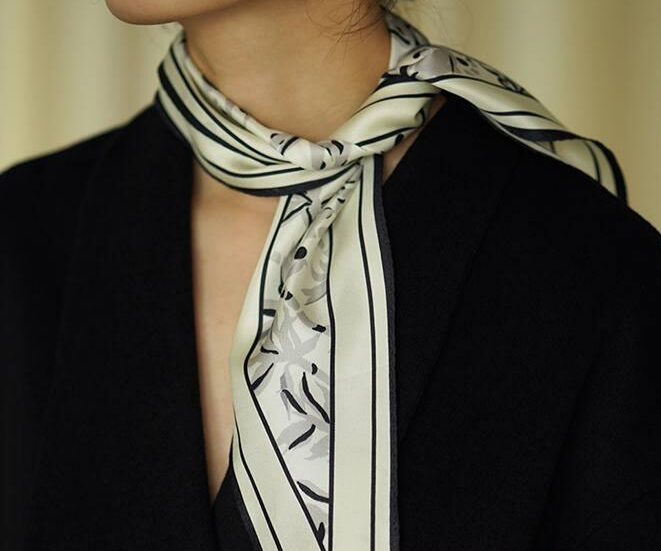
How Is the Use of Twilly Scarf Silk Evolving in High-End Merchandise
A narrow scarf has grown into more than a simple styling piece. In high-end merchandise, the silk twilly scarf now serves as a compact brand canvas. It can decorate a handbag handle, finish a gift set, or carry a print story through a seasonal collection. Its small size makes it simple to ship, display, and bundle. Yet the silk surface still signals luxury. For buyers building a collection, this mix turns the twilly scarf into a useful link between a fashion accessory and a repeatable branded item.
Rising interest in the twilly format also points to a shift in luxury merchandising. The luxury customer today wants to buy accessories that he or she can personalize, collect, and wear differently. A great twilly can band a handbag, star in a campaign, and serve as a “gateway” product to a higher-end brand at a lower cost of entry.
What Is a Silk Twilly Scarf and Why Is It Moving Beyond Handbag Handles?
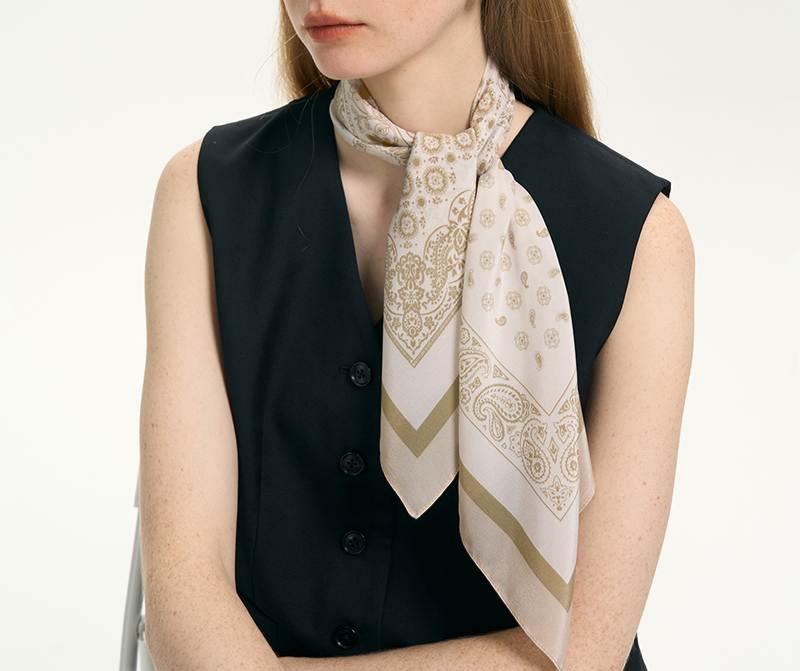
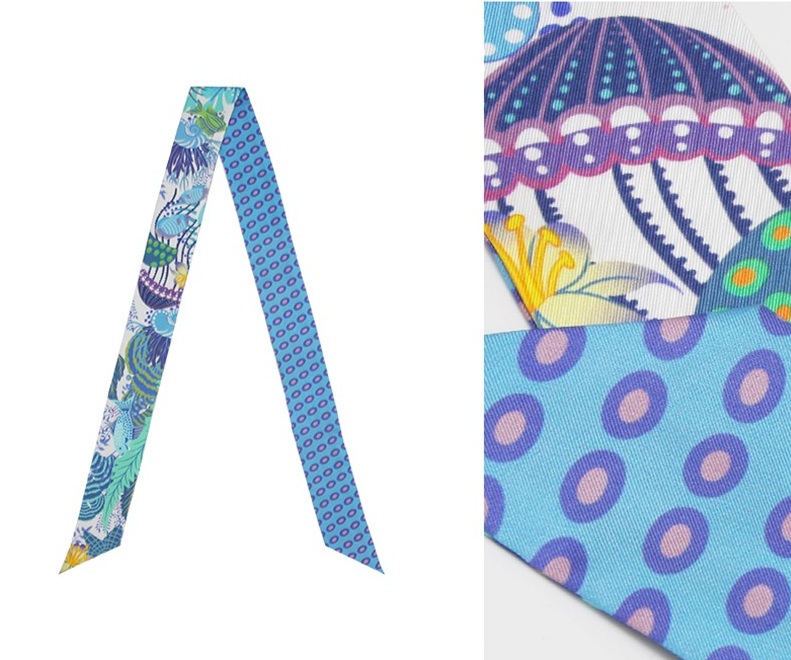
Many people searching for “what is a twilly scarf” already know that a twilly is a long, narrow scarf which can be used for wrapping, tying, and layering under clothing. Unlike a traditional square scarf, a thin silk scarf such as this uses less material to create a clean line around a handle, wrist, ponytail, or neck. The narrow shape of a twilly also helps to control the borders, logos, stripes and directional motifs of a design.
This format works well when artwork must stay visible after styling. On a large square scarf, a logo can hide in folds. On a narrow silk scarf, the artwork can repeat along the length so a monogram or signature border shows in several spots. That keeps the product easy to recognize whether tied in a bow, wrapped around a handle, or folded as a neck piece.
The format also helps brands keep production steady. A company can hold one base size while changing artwork, color stories, labels, or packaging for different drops. The accessory feels collectible. Yet output stays more predictable than a large, highly finished scarf that needs many size and construction choices.
How Luxury Brands Use Twilly Scarves in Merchandise Design
The best-known use is the twilly scarf for handbags. Wrapped around a handle, a printed strip adds color and personality while shielding leather from hand oils and wear. A silk scarf for bag handle program can also match lining prints, dust bags, garment packaging, or seasonal campaign graphics. The scarf then forms part of a full visual system rather than a lone accessory.
The handle-wrap use also opens room for product storytelling. A floral print can support a spring collection. A geometric border can echo the lines of a new handbag range. A limited-edition print can mark an anniversary or collaboration without forcing the brand to redesign its full product line.
For retailers and private labels, twilly scarf collections for bags suit add-on gifts, loyalty items, and launch products. A limited print can build urgency. A core monogram pattern can stay available year-round. Because the item is light and compact, brands can test several designs without the inventory load required for full-size scarves.
Twilly scarves can also sell as cross-category accessories. The same print may show on a handbag handle, a hair piece, a gift ribbon, or a small travel set. This repetition builds visual consistency across ecommerce pages, retail displays, and unboxing materials.
Silk Twilly Scarf Specifications That Affect Perceived Value
Silk Twill, Weight, Size, and Drape
Material choice sets the tone. Silk twill offers a crisp hand, subtle diagonal texture, and enough body for a stable knot. A premium program should confirm silk grade, fabric weight, color standard, finished dimensions, and shrinkage expectations before sampling. Zhigeng Silk works with 6A-grade mulberry silk and OEKO-TEX-certified materials. This supports a refined hand feel while meeting safety and sustainability needs.
The final width and length should match the intended use. A shorter format may suit a compact handle or hair styling. A longer version gives more room for wrapping and repeated artwork. Designers should also decide if the scarf needs a strong border, a central logo, or a continuous pattern. The artwork must be checked at the actual finished scale, not only on a large digital screen.
Custom Printing, Hemming, Labels, and Packaging
Printing and finishing matter just as much. Custom print artwork should come in high resolution, with border placement checked against the narrow format. Vector artwork helps with logos and repeated patterns. High-resolution raster files can reproduce paintings, photographs, and detailed illustrations. Pantone references can guide color matching. A physical sample remains essential because silk reflects light differently from paper or a monitor.
Buyers should review a sample for color, registration, reverse-side look, hand feel, and edge behavior. Hand-rolled edges create a couture signal and suit a luxury silk surface. Baby-machine hemming can give a consistent and efficient option for larger programs. Labels, individual poly bags, envelopes, or branded boxes complete the merchandising experience and help the item arrive ready for retail display.
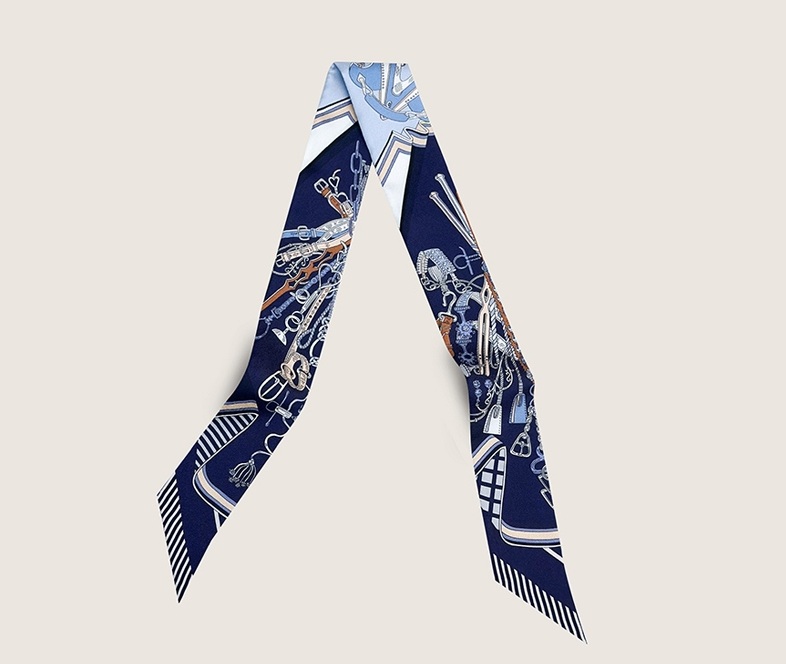
How to Choose a Custom Twilly Scarf Manufacturer
Artwork Preparation, Sampling, MOQ, and Lead Time
Start with process clarity rather than a catalog image. Ask whether the supplier can recommend the weave, width, and print method for the intended use. Confirm whether the artwork team can prepare files, adjust repeats, or redraw supplied sketches. A capable supplier should also explain how the design will be checked before production, especially when the scarf includes borders or small lettering.
Sampling is one of the most important purchasing steps. Confirm the sample timeline, production window, MOQ per design, payment terms, packaging requirements, and approval checkpoints in writing. At Zhigeng Silk, we typically support 7–10 days for sampling and about 15–20 days for bulk production after approval. It offers flexible low-MOQ options for emerging brands and private labels.
A supplier should be able to explain how small-batch orders are handled. Digital printing is often suitable for testing artwork because it avoids some of the setup limits tied to traditional screen printing. This can help brands compare several colorways or launch a limited collection before committing to a larger production run.
Quality Control, Sustainability, and Supplier Communication
Quality control should cover more than a final visual check. A reliable partner can explain inspection points for fabric defects, print color, dimensions, hemming, labels, and packaging. Zhigeng Silk reports more than 50 QC checkpoints. It uses AZO-free dyes and provides one-to-one coordination from proofing to shipment. These details matter when a narrow accessory is expected to match a larger handbag or apparel collection.
Sustainability should also be assessed in practical terms. Buyers can ask about certified materials, dye systems, packaging choices, and whether excess materials are minimized during production. For brands serving environmentally conscious customers, these details form part of the product story and should be confirmed before marketing claims are published.
Clear communication is equally important. The supplier should provide a digital proof, confirm revisions in writing, and explain which changes may affect the timeline. A dedicated account manager can make it easier to coordinate artwork, sampling, packaging, and shipping across several designs.
How to Wear Twilly Scarf Designs Across a Product Line
A good design system supports several answers to how to wear a twilly scarf. Show the same print tied in a bow, wrapped around a handle, knotted at the neck, worn as a bracelet, or woven through hair. These are examples of how the print can be shown, and customers can immediately understand the product. Wholesale buyers can also immediately have content for product pages and for displays in retail stores.
Styling should also consider the relationship between the scarf and the product it accompanies. A bold print can bring energy to a neutral handbag. A restrained border may suit a classic leather collection. When the scarf is intended as a gift, packaging should make the shift from accessory to present feel intentional.
For photography, show at least two scales: a close view that reveals the silk texture, print sharpness, and edge finish, and a wider view that explains proportion on the handle or body. Retailers can also demonstrate multiple tying methods through short videos or step-by-step images. This improves product understanding without requiring a long explanation at the point of purchase.
FAQ
Q: How long is a typical twilly scarf?
A: For narrow formats, we work with dimensions of approx. 5-7 cm width and 100-120 cm length. We then match the handle, the type of knot, and the print to the umbrella that is to be produced.
Q: Is silk twill suitable for wrapping a handbag handle?
A: Yes. Silk twill has enough structure to hold a neat wrap while remaining soft against leather. Sampling is recommended to confirm grip, scale, and color.
Q: What artwork file is best for a custom printed twilly?
A: Vector artwork or a 300 DPI raster file is preferred. Include the repeat, border, logo clear space, and Pantone references where exact color matters.
Q: What MOQ should a small brand expect?
A: MOQ varies by fabric, print method, and packaging. A flexible supplier may support low quantities per design, especially when digital printing is used for sampling and small-batch launches.

 consult
 WHATSAPP
 leave message
 top