







Related news
Silk Scrunchies Manufacturing Process: How Custom Hair Accessories Are Made
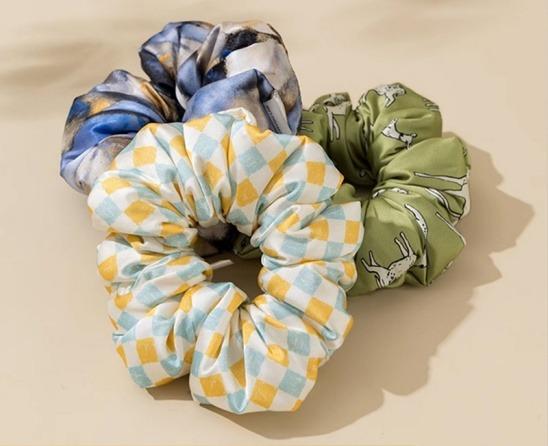
A finished silk scrunchie looks simple: a ring of lustrous fabric gathered around an elastic band. Manufacturing one consistently, however, requires controlled decisions about silk weight, print placement, cutting, seam strength, elastic tension, and final inspection. For brands, boutiques, salons, and gift programs, understanding the process makes it easier to approve a sample that can be repeated across a production run.
This guide follows custom silk scrunchies from artwork and specification through packaging. It also explains where buyers should set measurable tolerances, especially when a collection includes several sizes, branded labels, or custom print designs.
What Defines Manufacturing-Ready Silk Scrunchies?
Production begins with a specification, not with sewing. A useful tech pack states the finished outer diameter, fabric tube width, elastic length and width, seam method, label position, print scale, color reference, and packaging format. A reference sample or annotated photo can clarify the intended fullness, but dimensions are still needed because visual descriptions such as “oversized” vary between markets.
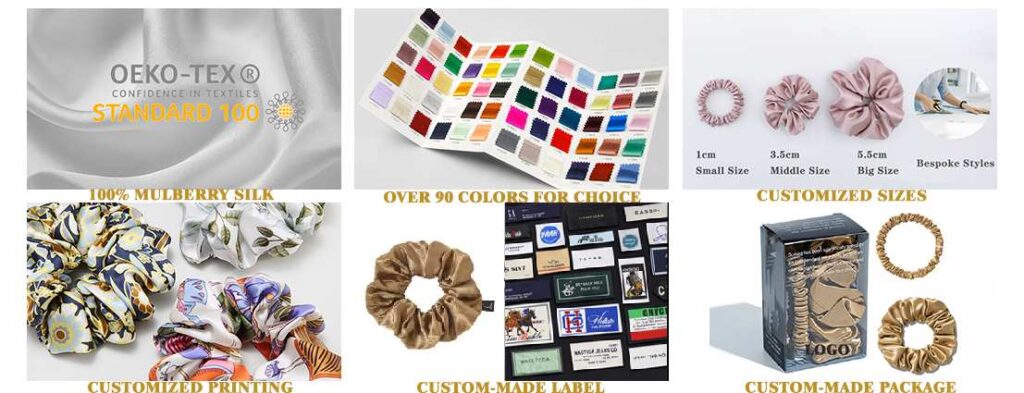
Material selection also changes the result. Zhigeng Silk identifies 19- and 22-momme silk satin as standard options for its silk scrunchies. The 19 momme fabric creates a soft, flexible gather, while 22 momme gives the accessory more body and a substantial hand. Both can use 6A-grade mulberry silk; OEKO-TEX-certified material is available for brands that prioritize tested, skin-contact textiles. Buyers should confirm fiber content and momme rather than relying on the word “satin,” which describes a weave and can also refer to polyester.
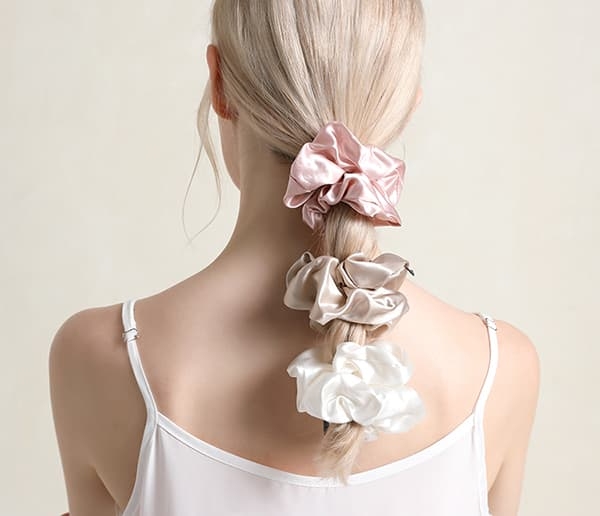
How Silk Scrunchies Are Made, Step by Step
1. Design Review and Custom Print Preparation
For solid-color production, the supplier matches a submitted Pantone reference or approved swatch. For custom print, artwork is checked for repeat size, resolution, color mode, seam allowance, and the part of the motif that will remain visible after gathering.
Large logos can disappear into folds, so a smaller repeat or a deliberately placed emblem often performs better. A digital mock-up helps confirm scale, but a physical strike-off shows how color and fine detail actually translate onto silk.
2. Fabric Inspection, Printing, and Color Fixation
White silk is inspected before printing or dyeing so flaws do not move into production. Reactive digital printing is especially useful for multicolor artwork, gradients, and smaller custom runs because the color bonds with the silk fiber.
After printing, the fabric is steamed or otherwise fixed, washed to remove unfixed dye, and finished to restore its hand. It is then checked again for color consistency, stains, registration errors, and fabric defects. This two-stage fabric control is a stronger safeguard than inspecting only completed accessories.
3. Precision Cutting
Approved fabric is cut into strips according to the pattern. The cutter controls strip width, length, grain direction, and print position.
Consistent dimensions matter. A strip that is too narrow produces a lean-looking ring, while excess length creates more gathers and changes the apparent print scale. Printed orders may require planned placement or repeat matching to keep key motifs away from the closing seam.
4. Tube Sewing and Seam Control
Each strip is folded lengthwise with the face inside and sewn into a tube. Stitch density, seam allowance, thread tension, and needle choice must suit fine silk. An unsuitable needle can leave pulls or visible punctures.
The tube is turned right side out, and the seam is distributed so it does not twist around the finished ring. Operators also inspect the surface for snags created during handling.
5. Elastic Insertion and Joining
Elastic is fed through the fabric tube and joined by stitching or another approved construction method. Its cut length determines holding power, but the fabric-to-elastic ratio determines fullness.
A manufacturing sample should therefore be tested on the intended number of hair wraps, not judged only when lying flat. This is especially important for silk scrunchies for hair that must balance a secure hold with comfortable tension.
6. Closing, Labeling, and Finishing
The fabric ends are closed with a neat, secure seam. Depending on the design, the closure may be concealed or finished as a controlled external join.
Printed or woven brand labels can be inserted at this stage, provided their placement and stiffness do not interfere with wear. Loose threads are trimmed, the ring is shaped, and the silk is carefully pressed or steamed without flattening the gathers.
Material, Construction, and Branding Choices
A sourcing brief should connect every option to the customer experience. The table below shows the decisions that most directly affect appearance, performance, and production repeatability.
| Silk | 19 or 22 momme silk satin | Fiber content, weight, sheen, hand |
| Size | Slim, classic, oversized | Outer diameter, tube width, fullness |
| Color | Dyed solid or custom print | Pantone/swatches, strike-off, motif scale |
| Branding | Printed label, woven label, custom package | Position, dimensions, artwork, materials |
| Elastic | Width and tension by use case | Stretch recovery and wrap count |
Custom print is more than placing a logo on fabric. Designers should preview artwork at the gathered scale and decide whether the goal is an all-over pattern, a recognizable brand mark, or coordinated accessories using the same artwork.
Zhigeng Silk can support custom patterns, colors, dimensions, printed or woven labels, and retail packaging, allowing silk hair scrunchies to fit a wider scarf, sleepwear, or gifting collection without forcing every item into identical construction.
Quality Control for Silk Hair Scrunchies
Visual and Dimensional Checks
Inspectors compare the finished item with the approved sample and tolerance sheet. Checks should cover diameter, tube width, fullness, seam appearance, closure alignment, print orientation, shade consistency, label position, oil marks, pulls, and loose threads.
For mixed-color orders, inspection under consistent lighting reduces disputes caused by changing color conditions. Zhigeng Silk describes quality control from raw fabric selection through printed or dyed fabric inspection and final product checking, supported by more than 50 checkpoints across its custom silk workflow.
Functional and Packaging Checks
The elastic should be extended repeatedly to check recovery, while the join and closing seam are examined under tension. A practical wear test confirms the expected wrap count and comfort on hair.
Packaging inspection verifies quantity, barcode or label accuracy, folding presentation, and protection from moisture or abrasion. A standard individual polybag can be used, while envelopes, gift boxes, bags, recycled packaging, and other private-label formats should be sampled because packaging dimensions affect presentation and shipping volume.
Sampling, MOQ, and Production Planning
A pre-production sample should lock the material, measurements, elastic tension, print or dye result, seam construction, label, and packaging. Comments are most useful when quantified. For example, increase the tube width by a stated amount or reduce elastic length to reach an agreed wrap count.
Once approved, the signed sample becomes the reference for bulk inspection.
MOQ depends on fabric availability, color or print setup, size mix, labels, and packaging. We specialize in flexible, low-MOQ custom work and cite sampling around seven days, with typical production or delivery windows of roughly 15–30 days depending on the product and order.
Buyers should reconfirm the schedule for the exact silk scrunchie specification, particularly before seasonal launches. Artwork readiness, strike-off approval, custom packaging, and peak factory periods can all affect timing.
When comparing suppliers, ask for a written specification, sample sequence, inspection plan, defect policy, packing method, and shipment milestone. The search phrase scrunchies silk may return many retail listings, but B2B evaluation requires evidence that a manufacturer can repeat the approved fullness, tension, print color, and closure quality across the entire order.
FAQ
Q: What type of silk is best for scrunchies?
A: Mulberry silk satin is a common premium choice because its smooth face, drape, and luster work well with gathered construction. Nineteen momme provides flexible softness, while 22 momme offers more body. Confirm the fiber content because satin alone does not mean silk.
Q: How are custom prints applied to silk scrunchies?
A: Artwork is prepared as a repeat or placement design, printed onto silk, color-fixed, washed, finished, and inspected before cutting. Reactive digital printing supports detailed multicolor designs and gradients. A physical print sample is advisable because gathering changes how the motif is seen.
Q: How much fabric is needed to make a silk scrunchie?
A: The amount depends on the finished diameter, tube width, and desired fullness. Manufacturers calculate a strip pattern rather than using one universal quantity. The approved strip dimensions and fabric-to-elastic ratio should be recorded so bulk pieces match the sample.
Q: What should be checked in a pre-production sample?
A: Check silk weight and hand, finished measurements, gathers, elastic recovery, wrap count, seam security, print color and scale, label placement, and packaging. Approve measurable details in writing and retain the sample as the bulk quality standard.
Q: Can silk scrunchies be private labeled in small batches?
A: Yes. Low-MOQ programs can combine custom colors or prints with printed or woven labels and branded packaging. Feasibility still depends on design count, material stock, printing setup, and packaging minimums, so each component should be quoted separately before sampling.

 consult
 WHATSAPP
 leave message
 top
top