


Related news
Digital Scarf Printing: Complete Guide to Custom Printed Scarves for Brands
A scarf can carry a collection story, an artist collaboration, or a retail identity in one compact product. Digital scarf printing makes that possible without the setup burden of traditional screens. Artwork is translated directly to prepared fabric. This allows brands to test more colorways, place detailed artwork precisely, and develop smaller collections with less commitment.
The opportunity is not simply to put a logo on fabric. Brands need to choose a suitable material, printing construction, finishing method, and approval process. These choices protect the intended look once the scarf is folded, worn, and washed.
What Digital Scarf Printing Means for Brand Development
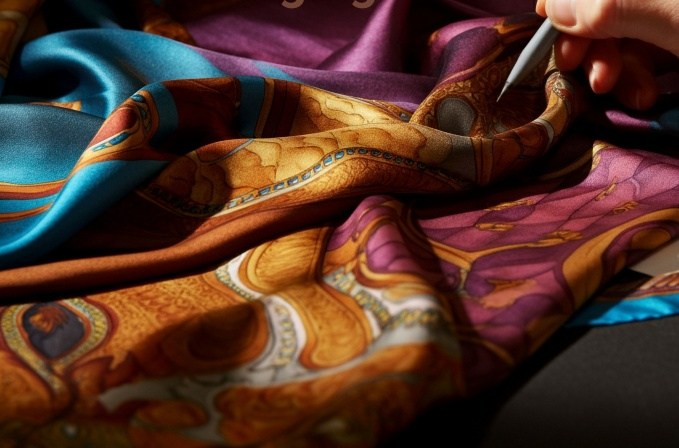
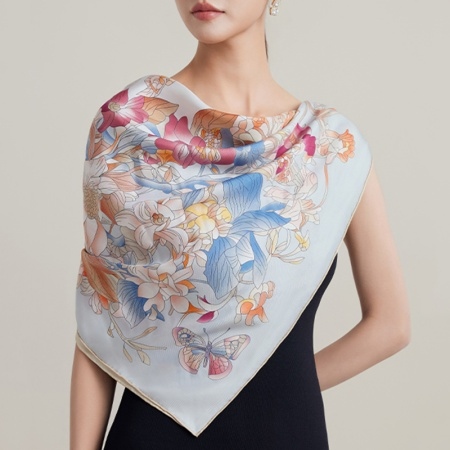
A digital print scarf is produced by sending a digital artwork file to an inkjet textile printer. This replaces the older method of separating the design into screens. The fabric is prepared to receive ink. It is then printed, fixed by steaming or heat treatment, and washed to remove unfixed color.
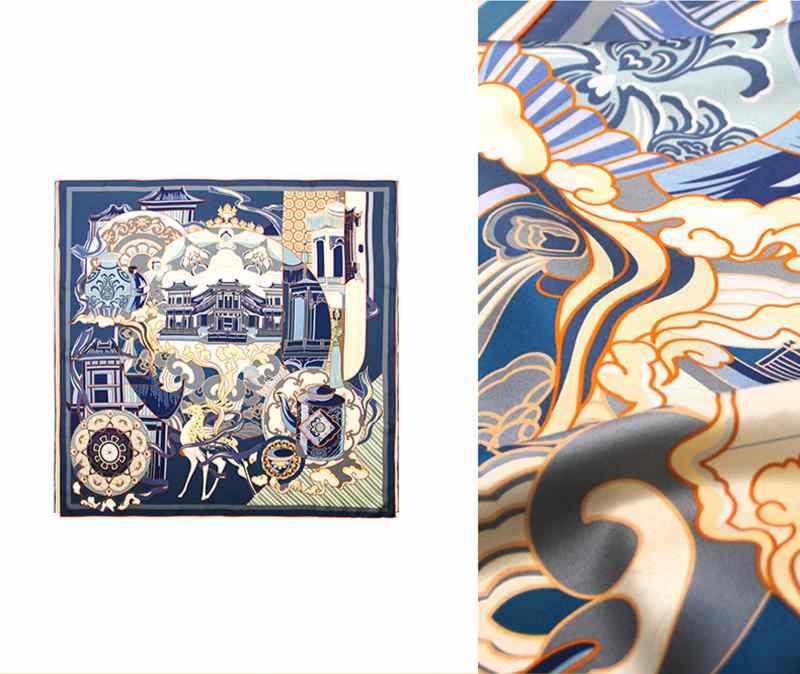
This method is especially effective for painterly artwork, photographs, fine linework, gradients, and multi-color borders. There is no screen limit to manage. It also makes design testing more flexible. A small capsule collection can use several artworks without creating a new screen for every color.
Yet printing technology alone does not guarantee a premium result. Silk sheen, fabric weight, edge construction, and color approval all influence how the same artwork appears. Printing should be treated as one stage in a complete product development process.
Choose the Fabric Before You Finalize the Artwork
The fabric determines a scarf’s drape, color character, opacity, texture, and care expectations.
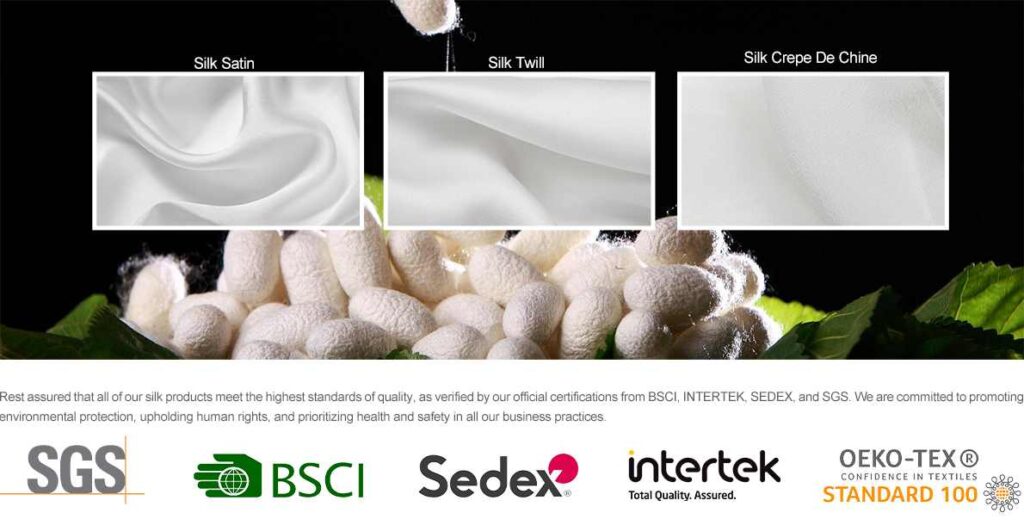
Silk satin or charmeuse creates a luminous face and fluid luxury hand. Silk twill has a recognizable diagonal texture and supports a more classic scarf appearance. Crepe de Chine is lighter, more matte, and quietly elegant. For brands seeking a softer price point and everyday use, modal is a plant-based regenerated cellulose fiber with a smooth drape and strong moisture absorption.
Fabric selection should happen before final artwork approval. A bold border may look deep and crisp on satin but softer on crepe. Pale colors can also appear different depending on the weave and fabric density.
At Zhigeng Silk, our brands can select 6A-grade mulberry silk and OEKO-TEX-certified material options for premium, skin-conscious collections. Modal is also available for lightweight and accessible digital print scarves designed for everyday fashion, travel, gifting, or promotional collections.
Request physical swatches and a printed strike-off before confirming a bulk order. Digital colors viewed on a screen cannot fully show the effect of fabric texture, sheen, and dye absorption.
Single-Sided or Double-Sided Digital Printing on Scarf?
Most projects use single-sided printing. The main artwork is printed on the face of the fabric. It naturally shows through to the reverse. This approach is efficient, soft, and suitable when the reverse will not be the primary display surface.
The final result depends on the fabric and color palette. Highly saturated artwork and heavier materials may reduce visible show-through. A supplier should provide a physical sample. This lets the buyer inspect the scarf folded, draped, and viewed from both sides.
Double-sided printing is a separate product specification rather than a simple upgrade. It requires accurate registration and a fabric construction that can support two clear faces. Thicker pure silk qualities are often preferred for this process. Common starting points include 14, 16, 19, and 22 momme silk satin. The best choice depends on the design and opacity target.
For double-sided digital printing on a scarf, ask to see a strike-off folded and backlit, not only a flat photograph. This helps reveal reverse clarity, registration, shadowing, and any color difference between the two sides.
Double-sided printing is valuable for reversible designs, luxury scarves, and products where both sides remain visible during wear. Single-sided printing is often more practical for artwork-led collections where the front carries the main visual message.
Prepare Artwork That Survives Textile Production
Brands should send editable vector artwork whenever possible. Raster artwork should normally be supplied at 300 DPI at the final print size. The production file should include the full scarf dimensions, bleed or safe-area guidance, repeat direction, and a separate layer for logos or labels.
Tiny type, hairline rules, and abrupt tonal transitions are most likely to change when ink meets a textured textile surface. Important lettering should be large enough to remain readable after printing, cutting, hemming, folding, and wearing.
Photographs, hand drawings, oil paintings, and illustrations can all be used for custom scarf printing if they are digitized at sufficient resolution. If artwork is not production-ready, a supplier’s design team may be able to scan, redraw, or prepare the file.
Color requires a managed approval process. Provide Pantone references for critical brand colors. Still approve a physical sample because the final result is influenced by fabric, pretreatment, fixation, washing, and finishing.
A useful approval sheet should identify:
*Artwork version
*Fabric composition and weight
*Scarf size
*Print side
*Color references
*Edge treatment
*Logo and label position
*Permitted color or size tolerance
This creates one shared definition of “approved” for the brand, production team, and supplier.
Build a Sourcing Specification That Avoids Surprises
A complete sourcing brief covers more than the printing quote. State the fabric composition, momme or weight, dimensions, print side, edge treatment, labels, packaging, quantity per design, and target delivery date.
For luxury silk squares, hand-rolled edges made by experienced artisans create a soft and refined finish. Machine hemming can be a practical choice for selected modal scarves and volume-led styles. The edge method should be decided before sampling because it affects the visual balance and final measurements.
Packaging should also be included in the initial specification. Private-label boxes, ribbons, hangtags, barcode labels, dust bags, and folding requirements can influence both cost and delivery timing.
Low MOQ is most useful when it is paired with disciplined sampling. Zhigeng Silk supports low-MOQ custom projects with digital proofing, Pantone matching, private-label packaging, prototype development, and dedicated account support. Depending on the project, prototype sampling can take approximately 7-10 days. Bulk production may take around 15-20 days after approval.
Before release, inspect the finished scarves for:
*Color consistency
*Print registration
*Dimensions
*Edge quality
*Stains and marks
*Loose threads
*Fabric defects
*Label placement
*Packaging accuracy
Zhigeng Silk also applies more than 50 quality-control checkpoints to help turn a successful prototype into a repeatable production standard.
FAQ
Q: What is the best fabric for a digitally printed scarf?
A: There is no single best fabric. Silk twill suits classic luxury scarves. Satin creates a luminous finish. Crepe de Chine offers a softer matte appearance. Modal supports lightweight everyday styles. Order swatches and a printed strike-off in the intended artwork before choosing.
Q: Can photographs and detailed artwork be used for digital printing on a scarf?
A: Yes. Digital textile printing is well suited to photographs, illustrations, gradients, and multi-color artwork. Provide files at 300 DPI at the final size. Simplify extremely fine lines or tiny lettering where possible.
Q: What is the difference between single-sided and double-sided printed scarves?
A: Single-sided printing places the main artwork on one face, with natural show-through on the reverse. Double-sided printing aims for clear designs on both faces. It requires stricter alignment, suitable fabric, and a dedicated sample review.
Q: What MOQ should a brand expect for custom digital print scarves?
A: MOQ varies by fabric, size, finishing, and number of designs. Digital methods can make small design runs more practical than screen-based methods. The supplier should confirm the MOQ per design and per colorway in writing.
Q: How long does custom scarf production take?
A: Timing includes artwork review, sample approval, bulk printing, finishing, and packing. A typical workflow may allow 7-10 days for a prototype. Bulk production takes around 15-20 days after approval. Final timing should be confirmed according to the specific product specification.

 consult
 WHATSAPP
 leave message
 top
top