



Related news
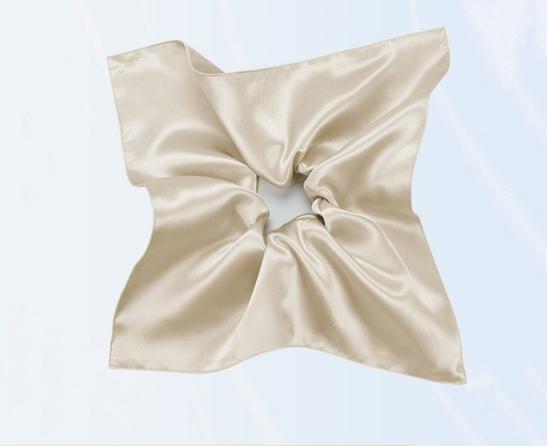
What Does “100% Mulberry Silk Satin” Mean? Fiber, Weave, Momme, and Charmeuse Explained
The phrase mulberry silk satin holds several details in four words. “Mulberry silk” points to the fiber. The “100%” mark means no blend at all. “Satin” shows how the yarns are woven. A label may also list charmeuse or a momme number. This gives extra facts on the fabric feel and weight.
Reading each term on its own makes it easier to compare scarves, pillowcases, sleepwear, and custom-printed silk. You can judge more than shine alone.
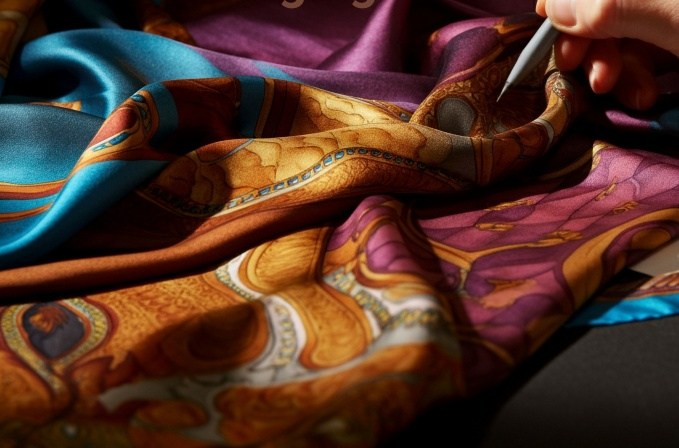
What Is Mulberry Silk Satin?
The direct answer to what is mulberry silk satin is a satin-weave fabric made only from mulberry silk fiber. One part of the name shows the raw material. The other part shows the fabric build.
Mulberry silk identifies the fiber.
Mulberry silk is made from the Bombyx mori silkworm. These precious creatures are reared on mulberry leaves, and from the long, smooth, and even threads created by the worms, this wonderful fabric is made. The smooth hand and natural shine of the silk are due to these threads.
100% Mulberry Silk Satin contains only Mulberry Silk and no other fibers such as Polyester, Nylon, Rayon, etc. It is essential to note that a label that reads “100% Silk” does not specify the type of Silk used; therefore, it gives less information than 100% Mulberry Silk Satin, for example. A note like 6A-grade mulberry silk adds more facts. Buyers should still ask for a clear composition list, a sample, and test papers.
Satin identifies the weave.
In a satin weave, the yarns cross over several threads before they link. These longer floats create a smooth and light-catching face. The back side looks more matte. The cloth drapes with ease, yet the face can catch on rough surfaces.
This fact answers two common sourcing questions. Is satin mulberry silk? It can be, but only when the fiber claim confirms it. Is satin silk by definition? No. Makers can build satin from silk, polyester, nylon, rayon, or blends. The word satin alone names a structure, not a fiber.
Mulberry Silk vs Satin Is Not a Like-for-Like Comparison
The usual mulberry silk vs satin talk places a fiber source on one side and a weave on the other. They fit in different columns on a spec sheet. They can still appear together in one fabric.
| Label term | What it tells you | What it does not prove |
| Mulberry silk | Silk source and fiber type | Weave, weight, or finish |
| Satin | Weave and surface character | Silk content |
| 100% mulberry silk satin | Fiber plus weave | Momme, colorfastness, or workmanship |
| Charmeuse | Lightweight, fluid satin-type fabric | Fiber content unless stated |
| 19 or 22 momme | Fabric weight | Fiber purity or weave |
The same idea clears up silk satin vs mulberry silk.
Silk satin is silk woven in a satin structure.
Mulberry silk is one kind of silk fiber.
Silk can be woven as satin, twill, crepe de Chine, habotai, etc. A clear order should contain both parts.
100% mulberry silk, satin weave, weight in momme, and finish.
Where Mulberry Silk Charmeuse Fits
Mulberry silk charmeuse is typically a lightweight and soft satin weave fabric made from mulberry silk. Bright face, dull back. Flowing drape. Can be used for making scarves, blouses, lingerie, pillowcases, etc.
In the silk charmeuse vs satin point, satin is the larger weave group. Charmeuse names a light and drapey fabric inside that group. Some suppliers use silk satin and silk charmeuse for the same cloth. Others treat silk satin as a heavier piece. Trade names alone do not settle the matter.
Charmeuse also does not promise silk content. Man-made fibers can form charmeuse too. To avoid doubt before sampling, state the fiber share, silk type, momme, usable width, print method, and finish. A physical swatch still helps because two fabrics with similar names can be handled in different ways.
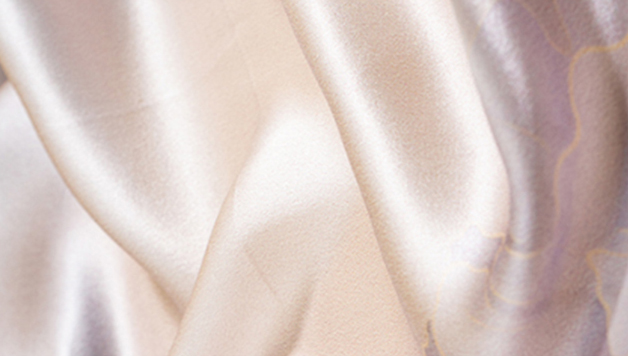
Silk Momme Meaning: Fabric Weight, Not a Complete Quality Grade
When buying silk, the silk momme meaning is useful to know. In practical terms, the silk momme weight means that one momme equals one pound for a 45” wide cloth, made up of 100 yards of fabric.
Numbers indicate the quantity of silk in the fabric in a given area. This fabric will be heavier and tighter the higher the numbers are. Higher numbers do not automatically mean better fiber, better weave, better dye, better color hold, etc., or better sewing. All of these traits need to be checked separately.
How 19 momme silk satin behaves
19 momme silk satin carries enough weight for good opacity yet keeps fluid movement. This balance works well for premium scarves, pillowcases, sleep items, and many garments. In printed work, it supports color without added bulk.
When 22 momme mulberry silk is appropriate
A 22 momme mulberry silk will have roughly 16% more mass than a 19 momme of similar construction. The fabric will often feel denser, more solid, and more opaque. For premium pillowcases, sleepwear, and scarves requiring extra body or wear strength, this is a plus.
Heavier is not always better. A soft neck scarf or flowing blouse may work better in a lighter weight. For double-sided digital printing, we generally suggest thicker pure silk because the added mass helps limit color bleed between the two faces. The artwork, product shape, drape, and target hand guide the pick.
Specifying Silk Satin for a Custom Print Project
For custom work, the fabric name should start the brief, not end it. A useful spec might open with 100% 6A-grade mulberry silk, OEKO-TEX certified, then add the satin or charmeuse build and target momme. It should also cover size and tolerance, print method, edge finish, labels, packaging, and any needed tests.
Artwork needs the same care. At Zhigeng Silk, we accept designs from hand drawings, digital files, photos, and paintings. For detailed or double-sided work, the company suggests JPEG or TIFF files in RGB (Adobe 1998) at 300 dpi. Its design team can help with scanning and file setup. Digital proofs catch layout issues. A physical sample shows color, registration, drape, and see-through on the chosen silk.
Scarf processes include single-sided digital printing, double-sided digital printing, and hand-screen printing. Buyers can also ask for hand-rolled edges, baby machine hems, private labels, and custom retail packaging. For double-sided printed silk scarves, these types of products indicate one-piece sample availability, typical sampling time in 7 to 10 days, and production time in 14 to 20 days after approval of the sample. The company uses AZO-free dyes, supports low-MOQ programs, and performs more than 50 quality checks. Current MOQ and lead time should be confirmed for each order because artwork detail and seasonal load can affect both.
Check the approved sample under neutral light before bulk runs. Compare both faces to the artwork. Look for streaks, snags, or weave faults. Measure the finished size. Hems, labels, and packaging should match the spec. Rubbing or washing tests should match the end use. These steps give 100% mulberry silk satin real meaning beyond the words on a label.
FAQ
What is the difference between mulberry silk and satin?
Mulberry silk names the natural fiber source. Satin names a weave. Mulberry silk can be woven as satin. Satin can be made from fibers other than silk.
Is 22 momme silk better than 19 momme silk?
This fabric is heavier and usually denser than the others, but fit is product dependent. We recommend 22 momme for more substance, opacity, and strength. For a lighter drape and wide use, we recommend 19 momme. Please check fiber, weaving, dyeing, and finishing quality separately.
How can I tell whether satin is real mulberry silk?
Check that the composition states 100% mulberry silk in clear words. Then request papers and a sample. Notes like silky, satin, or charmeuse do not prove fiber content. For commercial orders, independent fiber-content testing is more reliable than judging by touch, shine, or a home burn test.

 consult
 WHATSAPP
 leave message
 top
top