





Related news
Silk vs Satin Scrunchies: What’s the Difference and Which Is Better for Hair?
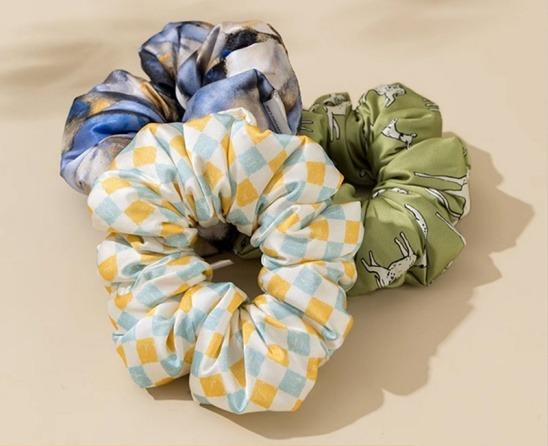
When choosing between a smooth silk scrunchie and a glossy satin scrunchie, there’s more to it than aesthetics. The type of fiber, weave, finish, and construction of a scrunchie affects the amount of friction that it puts on your hair – whether you’re sleeping, exercising, or just wearing it in a ponytail during the day. Here’s a real guide to comparing silk scrunchies with satin scrunchies. It also helps you pick a solid choice for personal use or a custom product line.
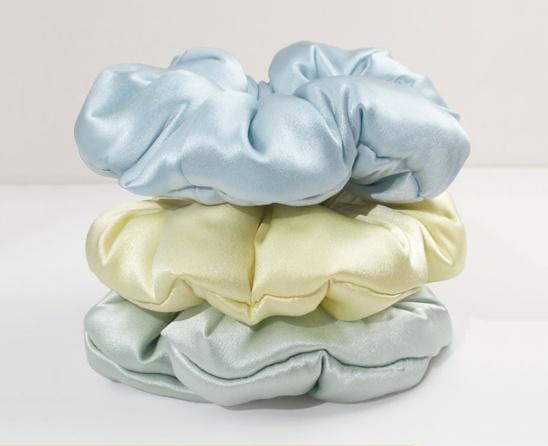
What Are Silk and Satin Scrunchies Made From?
Silk is a natural protein fiber.
Silk comes from silkworm cocoons. It forms a natural, smooth filament. Mulberry silk often appears in top hair accessories. Its long fibers create a soft surface with low drag. A well-made silk scrunchie reduces tugging, creasing, and moisture loss compared with rougher elastics. Grade and weight still count. A light silk shell feels delicate. A denser charmeuse or twill gives better strength for daily wear.
Satin describes a weaving method.
Saturated materials such as smooth Satin is a fabric weave, not a fiber. Materials such as Polyester, Nylon, rayon, and Silk can be woven into satin fabric. A cheap, glossy Polyester satin scrunchie may look nice at first but will lack the soft, breathable qualities of silk and will have poor temperature-regulating qualities. When buying scrunchies, check the fiber content of the material and don’t just trust the word ‘satin’ as this can be made from several different fibers. Some scrunchies even contain silk in the satin weave material as silk yarns to make a silk satin scrunchie. A synthetic satin scrunchie is made from man-made fibers.
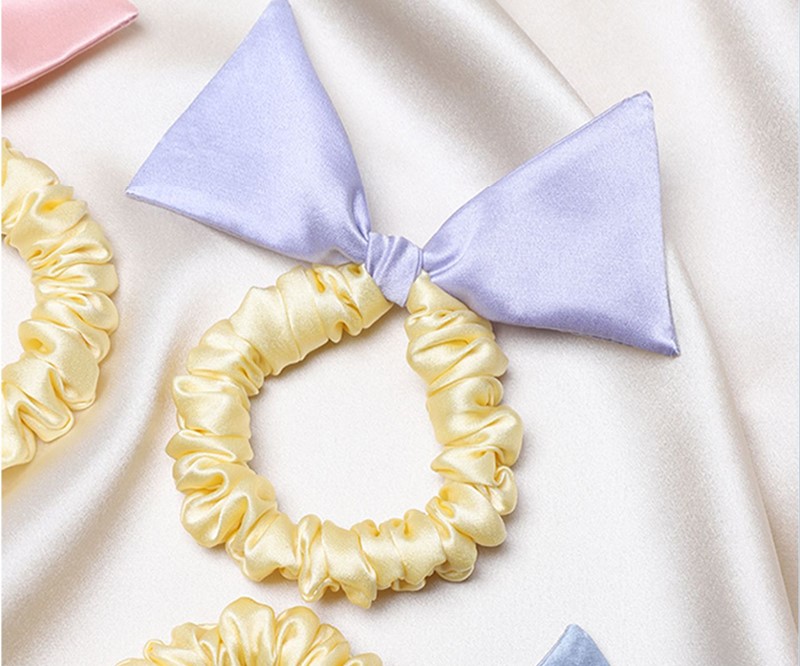
Silk vs Satin Scrunchies: How Do They Compare for Hair?
Friction, breakage, and tangling
Both surfaces feel smoother than cotton or exposed elastic. Both can treat hair with more care. Silk usually wins for fine, curly, or treated hair. Its filaments create less surface drag and pull less oil from the cuticle. Satin still shields hair well when the fabric is tightly woven, the seams stay covered, and the elastic is not stretched too far. Strong construction often closes the gap between the two materials.
Moisture and overnight comfort
Silk takes in a small amount of moisture yet stays gentle on skin. This helps with overnight styles. Polyester satin absorbs less and may feel warmer or more slippery in humid air. Hair that dries out easily often prefers a silk cover. For a budget option used for short times, satin still works well.
Durability, care, and value
Synthetic satin can be machine washed and continuously used. Silk requires care: a cold wash and drying off in the air, away from heat. It is worth the extra cost when used every night or as a special occasion gift. Look for reinforced stitching and a soft, fully enclosed elastic. It is the small details such as these which will have the greatest impact on the life of your nightwear accessory, as opposed to the minute difference in weight of the fabric.
Which Material Is Better for Different Hair Types?
Curly and coily textures gain from a smooth surface and a loose wrap that keeps definition intact. Extensions, wigs, or fresh color call for a covered seam and low-friction lining. If you move between office looks and sleep, keep one gentle silk option for long wear and a washable satin option for daily use.
How to Choose Quality Silk Hair Ties
Check fiber, weight, and finish.
Ask if the shell is 100% silk or a blend. Request the fabric weight when specs matter. A steady dye, clean luster, and even texture point to better finishing. For private-label work, approve a physical sample before bulk orders. Screen color cannot show hand feel or seam quality.
Inspect construction and customization.
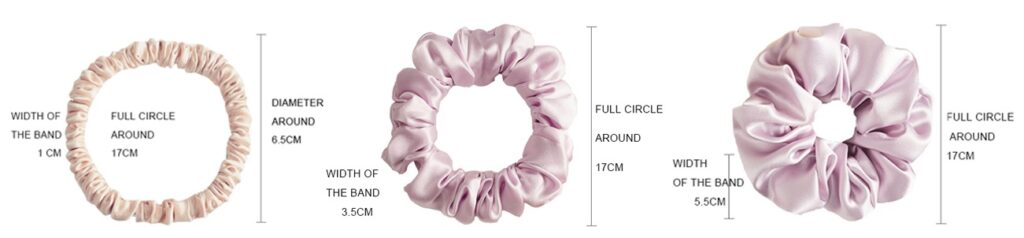
The best silk hair ties use enclosed elastic, balanced gathers, and stitching that does not scratch. Brands building a unique collection can work with Zhigeng Silk on custom print silk accessories. Digital printing places artwork accurately across the fabric. Custom print helps with coordinated color stories, logos, and seasonal patterns while keeping the soft hand feel customers expect from silk.
Consider care, packaging, and supply needs.
Confirm for wholesale programs: fabric, sizes, samples, minimum order quantity, delivery time, terms of inspection, and packaging. At Zhigeng Silk, we bring silk-focused product experience that covers printed textile work and export quality checks. A clear spec sheet helps match artwork, color approval, and final packing. These steps cut surprises when a silk satin scrunchie moves from sample to retail display.
Satin vs Silk Scrunchies: A Simple Decision Guide
Silk can be chosen to reduce friction, retain moisture, and show high quality. Synthetic satin can be chosen for easy care, low cost, and high-volume promotions. If you compare satin vs silk scrunchies for a product launch, test both after repeated stretch and wash cycles. Check recovery, look for pulled threads, and ask testers about overnight comfort. The best choice is the material and construction pair that fits the use case, not the shiniest label.
FAQ
Q: Is silk or satin better for preventing hair breakage?
A: Silk generally has less friction and better moisture control than satin, but that doesn’t mean you can’t get great results from a satin scrunchie – it just needs to be a good one and used with care. A good fit, covered elastic, and gentle care are key.
Q: Can I sleep with a satin scrunchie?
A: Yes. Choose a loose style with a smooth, enclosed seam. Avoid wrapping it tightly around wet hair.
Q: How can I tell if a scrunchie is real silk?
A: Check the fiber content label or supplier specification. The term satin refers only to the type of weave and does not indicate that the fabric is made of silk.
Q: Do silk scrunchies leave creases?
A: They can leave a light crease if wrapped tightly. A larger size and looser tension usually reduce dents.
Q: Are silk scrunchies worth the extra cost?
A: While expensive, it may be worth spending a bit more on this product for nighttime use, for very fragile hair, or as a luxury treat. However, high-quality synthetic satin washes well and is cost-effective for frequent washing and short-term use.

 consult
 WHATSAPP
 leave message
 top